
Roof Wind and Hail Coverage: What Missouri and Kansas Homeowners Should Check
Compare roof settlement terms, wind-and-hail deductibles, and storm-claim steps before a damaged roof turns into an unexpected out-of-pocket bill.
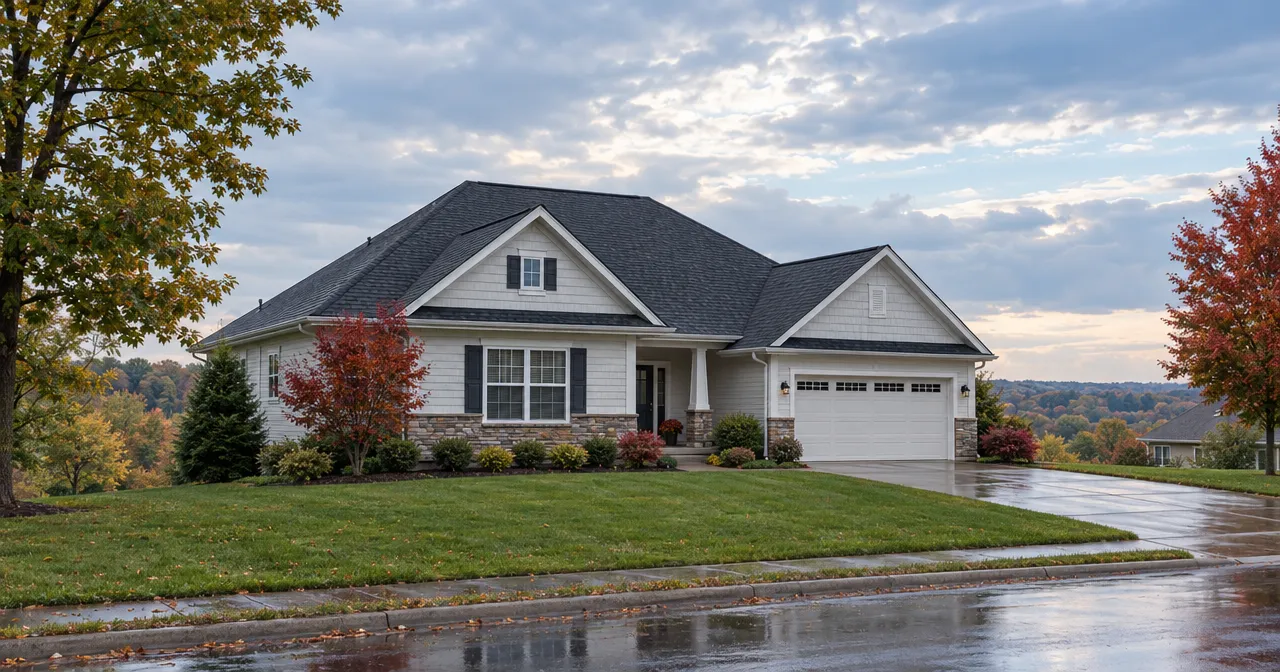
A hailstorm passes through Blue Springs, Lee’s Summit, or the Kansas side of the metro. Two neighboring houses have similar roof damage, but the owners receive very different claim payments. The difference may have less to do with the storm than with the policies they bought beforehand: one roof is settled at replacement cost, while the other is subject to depreciation and a separate wind-and-hail deductible.
“Homeowners insurance covers hail” is a useful starting point, not a complete answer. You also need to know what roof damage qualifies, how the insurer values the roof, which deductible applies, and whether special limits change the payment. Missouri’s Raising the Roof consumer resource makes the central point: the policy and its endorsements—not a general description of homeowners insurance—determine coverage. Kansas homeowners should ask the same questions of their own policy; the Kansas Department of Insurance home-and-renters resource is a starting point for comparing terms.
Here is a practical way to read your roof coverage before the next storm and to handle the decisions that follow one.
Start with the declarations page, then read the roof endorsements
Your declarations page is the quickest place to find the dwelling limit, policy period, and listed deductibles. It is not necessarily the whole story. An endorsement can change how a roof loss is paid even when the main dwelling coverage says “replacement cost.” Ask for the current policy and all endorsements, and look for language about roof surfaces, wind or hail, loss settlement, and exclusions.
Write down the answers to these questions:
- Is wind and hail included? If yes, are there restrictions on the roof or on particular materials and surfaces?
- What is the roof settlement basis? Replacement cost value (RCV), actual cash value (ACV), a roof-surface payment schedule, or another method?
- Which deductible applies? A flat all-perils amount, a separate wind-and-hail amount, or a percentage of the dwelling limit?
- What is the dwelling limit? This is often the number used to calculate a percentage deductible; it should reflect rebuilding cost, not simply a home’s sale price.
- Do any limits or exclusions affect the job? Ask about cosmetic hail damage, matching undamaged materials, code upgrades, and detached structures.
Those five answers are more useful than a premium alone. They let you compare two quotes on the same footing and estimate what you might have to pay toward a covered repair.
Replacement cost and actual cash value are not interchangeable
With replacement cost value, a covered roof loss is generally valued at the cost to repair or replace with comparable materials without a deduction for age-related depreciation, subject to policy limits, deductible, and conditions. With actual cash value, depreciation is deducted. The NAIC’s roof-coverage explanation illustrates why the distinction can change a claim by thousands of dollars. A roof can also have a different settlement provision from the rest of the house.
Consider a hypothetical covered loss: the insurer approves $24,000 of roof work, assigns $6,000 of depreciation, and the applicable deductible is $8,000. Under an ACV roof provision, the illustrative payment is $10,000 ($24,000 − $6,000 − $8,000). Under an RCV provision, the total illustrative payment could be $16,000 ($24,000 − $8,000), but the $6,000 in recoverable depreciation may arrive only after the work is completed and the insurer receives required documentation. Actual estimates, depreciation, limits, and payments vary by policy and claim.
That timing matters. A homeowner with RCV coverage may still need to pay the deductible and manage a repair contract before receiving the final claim payment. Missouri’s post-disaster claims guidance explains that insurers may issue an initial ACV payment and later release recoverable depreciation after repairs, subject to the policy’s deadlines. Ask which documents and completion dates your policy requires.
If your roof is older, do not assume the word “replacement” elsewhere on your declarations page settles the roof question. Ask your agent to point to the exact roof loss-settlement wording. A payment schedule or ACV endorsement may make your out-of-pocket share rise as the roof ages. Conversely, a lower premium on an ACV option may be reasonable for a household that understands and can absorb that risk. The important thing is to make the choice knowingly.
A percentage deductible is based on the insured dwelling amount
The deductible is the part of a covered loss you are responsible for. Some policies have one dollar deductible for most property claims and a separate one for wind or hail. If the storm deductible is a percentage, do the math using the amount specified by the policy—commonly the dwelling coverage limit—not the size of the roof estimate.
For example, on a home insured for $400,000, a 2% wind-and-hail deductible equals $8,000. It does not mean 2% of a $24,000 roof repair. If covered damage totals $6,500 and the $8,000 deductible applies, there may be no insurance payment for that claim. If covered work is $24,000 with no other limitations or depreciation, an $8,000 deductible would leave an illustrative $16,000 insurer payment. A flat $2,000 deductible on otherwise identical terms would change that calculation—but likely not the premium. The NAIC notes that special storm and roof deductibles can differ from a policy’s ordinary deductible.
At renewal, compare the dollar amount you could comfortably pay after a loss, not just the monthly bill. Recalculate any percentage when the dwelling limit changes. A 2% deductible on $350,000 is $7,000; after a change to $450,000, the same percentage is $9,000. Neither the roof’s age nor its actual repair cost controls that simple percentage calculation.
Check the details that can alter a roof repair
Damage versus deterioration. A covered wind or hail event is different from ordinary aging, neglected maintenance, or wear and tear. If a leak appears after a storm, the insurer will still investigate its cause and apply the policy’s language. Photograph visible damage, keep earlier roof records if you have them, and avoid guessing that every stain or missing granule came from a single storm.
Repair scope and matching. If only one slope is damaged, the insurer may determine that a partial repair is sufficient; the contractor may prefer a whole-roof replacement. Whether undamaged materials must be replaced to achieve a match depends on the policy wording, facts, and any applicable rules. Ask the adjuster for the written basis of the scope and discuss discrepancies before authorizing extra work.
Cosmetic damage and roof components. Some policies distinguish functional damage from dents or marks that do not affect performance, particularly on certain metal surfaces. Flashing, gutters, skylights, detached garages, and outbuildings may be handled under different provisions or limits. Make a list of everything affected instead of focusing only on shingles.
Building-code costs. An older roof may need work beyond like-for-like replacement to meet current requirements. Ask whether your policy includes ordinance-or-law coverage, what limit applies, and whether the proposed work is covered. A contractor’s statement that an upgrade is required does not by itself establish that the insurance contract pays for it.
The rest of the house. Wind-driven rain entering through a newly damaged roof raises a different coverage question from groundwater entering at foundation level or a sewer backing into the basement. The cause and policy language matter. NAIC homeowners guidance distinguishes sewer or drain backup coverage from separate flood insurance. A water-backup endorsement does not replace flood insurance. If you have a finished basement, ask about backup limits and deductibles while reviewing the roof—not after a storm exposes both problems.
What to do when a storm has already happened
First, keep people away from fallen lines, unstable structures, and unsafe roofs. Inspect from the ground and inside the attic or upper rooms if it is safe to do so; let a qualified professional handle roof access. Photograph missing shingles, ceiling stains, damaged vents, hail accumulation, and affected outbuildings. Record the date and save any pre-storm photos, roof invoices, or inspection reports you already have.
Take reasonable steps to prevent additional damage, such as arranging a safe temporary covering for an opening. Keep receipts and photograph the area before and after emergency work. Then contact your insurer or agent promptly to discuss the damage, the deductible, and whether to file a claim. Do not delay reporting a significant leak while waiting for several repair bids. The NAIC post-disaster claims guide offers a useful recordkeeping and adjuster checklist.
When an adjuster inspects, compare the estimate with the contractor’s itemized scope: roof squares or area, material type, vents and flashing, interior repairs, and the stated deductible and depreciation. If concealed damage appears during the job or prices change, ask about the insurer’s supplement process before committing to added work. Missouri’s claims guidance describes supplemental estimates as a way to address additional damage or costs that were not in an initial estimate; approval is not automatic.
Be cautious with a contractor who promises a “free roof” or urges you to sign a broad contract before you understand the claim. Ask for a written scope, payment schedule, and evidence of insurance, and confirm local requirements yourself. Your deductible is a real financial obligation; a contractor’s promise does not rewrite your policy.
What if you own a condo or a rental property?
A homeowner’s roof is not always insured under a standard owner-occupied home policy. If you own a condo, the association’s master policy may insure some building elements while your unit policy covers defined portions of your unit and belongings. Get the association’s insurance certificate and governing documents, then ask where roof damage, the association’s deductible, and any loss assessment would fall. Do not assume your unit policy automatically pays the association’s roof deductible.
If you own a rental house, tell the agent it is rented rather than owner-occupied and review the landlord or dwelling policy’s roof valuation, wind-and-hail deductible, and loss-of-rents conditions. A tenant’s renters policy primarily addresses that tenant’s belongings and liability, not your building. For a property owner with several locations, compare deductibles and roof provisions at each address; one carrier’s terms may differ from property to property.
These are separate coverage conversations, but the same principle applies: identify who insures the structure, how the roof will be valued, and who pays the deductible.
A short roof-coverage review before renewal
Set the declarations page next to the roof endorsements and ask your agent to show you two sample outcomes: a modest repair and a full replacement. Compare both the deductible and the settlement basis. Tell the agent when the roof was installed, what material it uses, whether you have a finished basement, and whether the property is owner-occupied, rented, or part of a condo association. If a roof was recently replaced, retain the invoice and update the policy information; ask whether the new roof changes the available options, without assuming a discount.
For households in Blue Springs, Grain Valley, Lee’s Summit, Kansas City, and surrounding Missouri or Kansas communities, Greco Insurance Agency can review the current policy and help compare suitable home coverage options. Request a personal insurance review with a local agent for a clear explanation of the roof settlement terms, storm deductible, and related gaps before you need to use them.