
Water Backup vs. Flood Insurance: A Basement Coverage Guide for Missouri and Kansas
Learn which policy may respond to a sewer backup, failed sump pump, or rising water—and what to check before a basement loss.
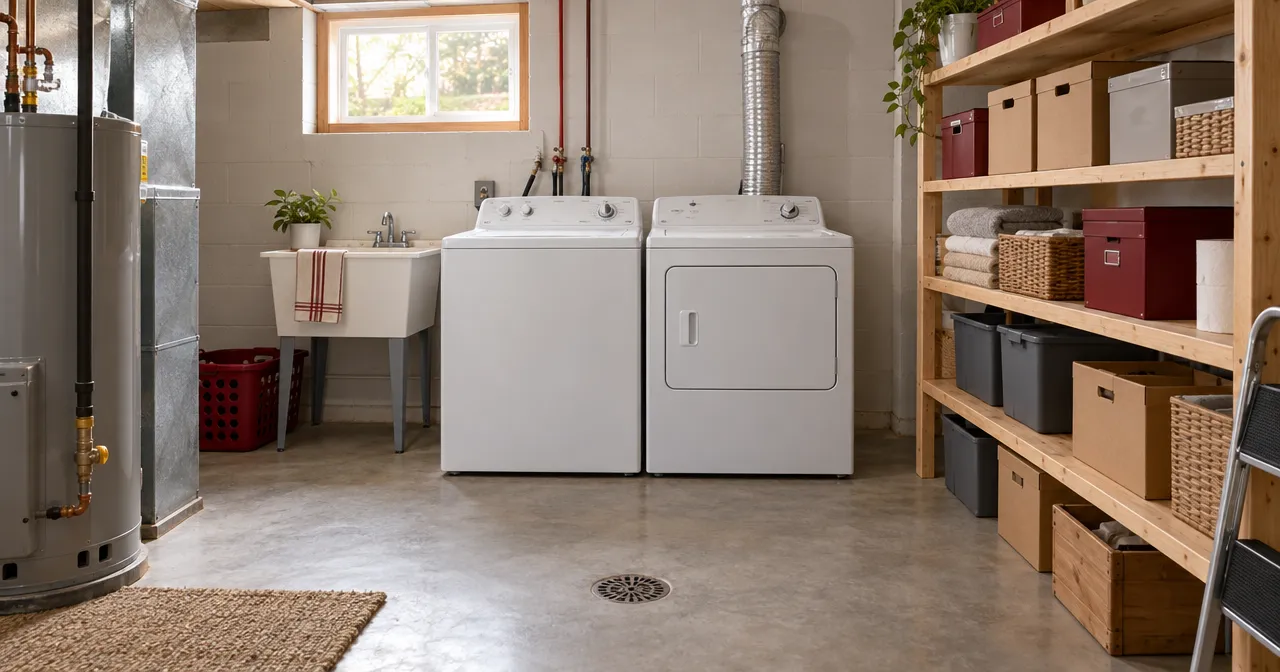
A finished basement in Blue Springs can have a very different insurance outcome depending on how water got in. Water that backs up through a floor drain, water that rises across the yard and enters a window, and water released by a broken supply pipe may damage the same flooring. They do not necessarily fall under the same coverage.
The useful question is not simply, “Does my homeowners insurance cover water?” It is where the water came from, which policy or endorsement addresses that source, and what limits and exclusions apply. This matters on both sides of the Kansas City metro: Missouri’s homeowners insurance FAQs say standard home policies generally do not protect against flood losses, while the Kansas Department of Insurance’s storm-and-flood guidance tells residents to check separately for sewer backup and sump pump failure.
Here is a practical way to sort out those distinctions before your basement needs repairs.
First, trace the water’s route
A basement puddle is a symptom, not a coverage category. Think through where the water started and how it reached the room:
- A sewer or drain backs up. Wastewater comes up through a floor drain or plumbing fixture. A water-backup endorsement may address this kind of loss, depending on its wording and cause.
- A sump pump stops or cannot keep up. Water collecting in the sump pit overflows into the basement. Some backup endorsements include sump overflow; others have different conditions. Ask specifically about pump failure, power outages, and overflow from heavy rain.
- Surface water enters from outside. Rain accumulates across the lot or a nearby creek overflows and water enters through a doorway or window. This points toward a flood question, not an ordinary sewer-backup claim. The National Flood Insurance Program (NFIP) explains what it considers a flood; whether a particular event qualifies depends on the facts and policy definition.
- A pipe or appliance inside the house leaks. A suddenly broken water-supply line is a different cause from a drain backup. The base home policy may respond to certain sudden, accidental water damage, subject to its terms; it may not pay to replace the failed part itself or to correct long-term leakage or maintenance problems.
- Groundwater seeps through a foundation. Slow seepage and water pressing through a wall can be treated differently from both an insured flood and a covered backup. Do not assume that buying a backup endorsement makes every basement water problem insurable.
One storm can involve more than one route. If rain fills the street and the sewer also backs up, document both rather than labeling the whole loss “flood” or “backup.” Flood-related sewer backup can involve different rules from a clog unrelated to a flood. Ask the insurers to explain their coverage decisions against the actual policy language.
What a water-backup endorsement may add
The NAIC’s homeowners insurance overview lists sewer-backup protection as an optional coverage distinct from separate flood insurance. A homeowner who sees a broad dwelling limit on the declarations page should not assume that same amount is available for a backed-up drain. Backup coverage can have its own limit, deductible, definitions, and exclusions.
Suppose a drain overflows into a finished basement and the covered repair and cleanup costs are $20,000. A policy with a $10,000 backup limit would not automatically pay the whole $20,000, even if the dwelling limit is much higher. The actual payment also depends on the deductible, which items are covered, valuation terms, and how the policy applies its limit. This is why comparing only the premium—or even only whether an endorsement is present—misses the real decision.
Ask an agent to find the endorsement and point out:
- What triggers it? Does it cover backup through sewers and drains, overflow from a sump, or both? Is a power interruption treated differently from mechanical failure?
- What limit and deductible apply? Is there one total limit for cleanup, building repairs, and belongings, or separate amounts? Do not assume the ordinary homeowners deductible is the one used.
- Which expenses are included? Ask about contaminated-water cleanup, removal and drying, flooring, drywall, stored property, and any additional living expense if the home becomes temporarily unlivable.
- Which conditions matter? Read exclusions or limitations for recurring seepage, maintenance, neglect, or an outside flood event. The endorsement’s name alone does not answer these questions.
A basement used only for storage needs a different limit discussion from one with a bedroom, bathroom, furniture, and finished flooring. Make a quick inventory, estimate what a realistic cleanup and repair might involve, and compare that exposure with the available coverage. Raising boxes off the floor can reduce damage but does not change the contract.
Flood insurance solves a different problem—and has basement limits
Standard homeowners and renters insurance generally do not pay for damage from rising floodwater. In a qualifying community, homeowners, renters, and business owners can consider an NFIP policy; private flood policies may also be available, with different terms. The NFIP defines a flood using specific conditions, including the inundation of at least two acres of normally dry land or at least two properties, one of which is yours. A wet basement by itself is not proof that the NFIP’s flood definition has been met. Check the flood definition in your policy if water is coming from outside.
A flood policy is not a promise to restore every basement improvement. Under the NFIP, basement coverage is restricted: certain essential building equipment may be covered, but finished walls and flooring and most personal property stored in a basement generally are not. Even if you buy contents coverage, the rules for basement contents remain narrow; washers, dryers, and some other specified items are exceptions when policy conditions are met. A private flood policy should be read on its own terms. The NFIP’s policy guide also explains that building and contents coverage are usually purchased separately and have separate deductibles.
That distinction changes the choice for a household with a finished lower level. A flood policy might cover qualifying damage to the furnace or other eligible building equipment but not replace a basement sofa or finished flooring. A water-backup endorsement might respond to a covered drain backup but not rising surface water. Neither is a substitute for reading the other’s exclusions.
Do not wait until a storm is in the forecast to start this review. NFIP policies generally take effect 30 days after purchase, although specified exceptions apply, including some mortgage-related transactions. Private policy effective dates can differ. Confirm the actual effective date before relying on new coverage.
Which policy belongs to whom?
The building owner and the person using the basement may have different interests. Make sure the correct policyholder is asking the right coverage question.
Homeowner: Review the dwelling, personal property, water-backup endorsement, and any separate flood policy together. If the basement was finished after you bought the house, tell your agent what changed. Confirm whether a backup loss can trigger additional living expense under your policy rather than assuming the usual loss-of-use coverage follows every water claim.
Renter: Your landlord’s building insurance is not your contents policy. Ask whether your renters policy offers backup protection for belongings, and whether you need separate contents-only flood insurance for eligible flood damage. A renter with boxes in a basement storage room should pay close attention to the NFIP’s basement-contents restrictions. The Kansas Department of Insurance’s home-and-renters guide distinguishes renters’ contents coverage from dwelling coverage.
Condo owner: The association master policy, unit-owner policy, and any separate flood coverage may divide responsibility for walls, fixtures, shared plumbing, and belongings. Obtain the master policy summary and governing documents. Ask who handles a backup in a shared line, who insures improvements inside the unit, and whether a loss assessment or master-policy deductible could affect you. Responsibility depends on the documents and the cause of loss, not simply which floor got wet.
Landlord or business owner: An owner-occupied homeowners policy is not the right assumption for a rented house, restaurant, or shop. A landlord should review the rental-property policy and possible loss-of-rents terms; a business owner should ask how commercial property, backup, flood, and any business-interruption protection apply. For example, a retailer in Kansas City could lose inventory and be unable to reopen while cleanup is underway. Commercial flood insurance has its own coverage and does not automatically pay lost income: the NFIP lists business interruption among items its policies do not cover. Ask about each property and income exposure separately.
Five questions to ask before renewal
Bring your declarations page and endorsements to a coverage review. These questions produce more useful answers than “Am I covered for water?”
- Which water events are covered right now? Have the agent distinguish an indoor supply-pipe break, sewer or drain backup, sump overflow, seepage, and a defined flood.
- What is the backup limit in dollars? Include the deductible and ask whether cleanup and repairs share that limit. Compare the answer with your actual basement finishes, equipment, and belongings.
- Is flood coverage in force, and for what? Check building and contents limits and deductibles, any basement restrictions, and the effective date. Do not infer flood protection from a mortgage requirement or from having homeowners insurance.
- Who owns the affected property? For a rental or condo, identify which policy covers the structure, improvements, and contents. A business should identify property and income exposures separately.
- What has changed since the last review? A finished basement, new home office, tenant, additional inventory, upgraded furnace, or new storage arrangement can make an old limit a poor fit.
The answers may reveal a gap you choose to insure, a limit you choose to change, or a risk you decide to retain. The goal is to make that decision before a loss, with the contract in front of you.
If water is already in the basement
Prioritize safety. Keep people out of standing water when electrical equipment or contaminated sewage may be involved; get qualified help rather than entering an unsafe area. If safe, take photos or video showing where water entered, its height, damaged items, and any visible drain or sump condition. Save plumber, restoration, and temporary repair records. Do not throw away damaged belongings before documenting them unless health or safety requires it.
Notify your agent or insurer promptly and describe what you observed, not a guessed cause. If an outside flood and an indoor backup may both be involved, ask which insurers should receive notice. Take reasonable steps to prevent more damage when safe, keep receipts, and ask the adjuster how to document cleanup before permanent repairs. Kansas’ homeowners claim guidance advises photographing damage and retaining receipts for temporary repairs.
For households in Blue Springs, Grain Valley, Lee’s Summit, Kansas City, and nearby Missouri and Kansas communities, Greco Insurance Agency can help compare home coverage options and explain how backup and flood protections differ. Request a personalized home insurance review with a local agent, or contact the agency with questions about an existing policy.